
When You Think You Know
Sign up for blog updates!
Join my email list to receive updates and information.
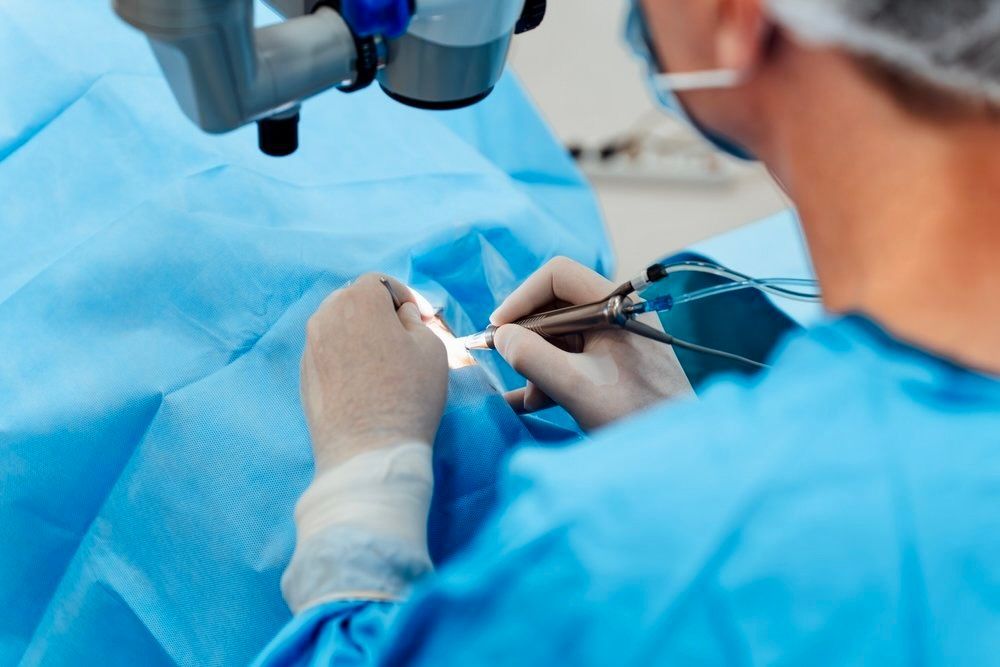
Sometimes it’s necessary to leave your "familiar room where you know everything" in order to get a fresh look at things – or, in fact, to see how wrong you were about the way you've been seeing things.
This came home to me during the past few weeks, when I underwent cataract surgeries in both my eyes. The comparisons came fast and furious:
- St. Paul had to be knocked off his horse before the “scales fell” from his eyes, according to Acts 9, and he saw that his true mission lay not in persecuting Christians but leading them to holiness
- Johann Sebastian Bach and George Frideric Handel both suffered cataracts, both underwent procedures by an itinerant oculist and quack, and both had very bad outcomes.
- French painter Monet developed cataracts, significantly affecting his work
It was the time gap between first-eye and second-eye surgery that stopped me cold.
The two eyes are usually treated separately. My surgeries followed the typical protocol of two weeks between surgeries. During that period, I saw my world in two different lights at once: one eye clear and bright, the other yellowed and dim.
I started playing a little game with myself during that two-week period, covering the “improved” eye with my hand and observing the difference: the vision of one eye clear and bright, the other yellowed and dim.
What was I witnessing? Experiencing the world with two different eyes in two different ways? Past and present side by side? What I thought was true versus what truly is?
Perhaps what was most alarming is the realization that I didn’t even know that I’d lost so much true vision. After surgery, I was pleasantly surprised not only by my new visual clarity, but by the realization of how gradually and stealthily the dimming happened – a loss we adapt to without noticing.
Rainer Maria Rilke said it this way in his poem, “Entrance:”
. . . when evening comes, go out
of your familiar room where you know everything;
for your house stands on the edge of distances –
Cataracts are the most common cause of vision impairment among American adults, with prevalence reaching as much as sixty percent in people seventy-five and older. Cataracts also are the most common surgically reversible cause of vision loss in the U.S., and the most common major surgical procedure performed here.
Charles Kelman, an American surgeon, introduced phacoemulsification in the late 1960s, using ultrasound to break up the clouded lens so it can be removed through a very small incision. A new, silicone lens is then inserted.
Despite how horrible all this might sound to you, the procedure is completely painless and typically takes ten to fifteen minutes per eye under numbing eyedrops and gel, and “twilight” sedation. Patients go home shortly after the procedure, as I did.
Medicare covers basic cataract surgery and standard lenses. But – you guessed it – if you need a lens for reading or astigmatism, you pay the extra cost for that lens out of pocket.