
The Poem Was Never the Point
Sign up for blog updates!
Join my email list to receive updates and information.
Remember counting syllables on your fingers in grade school and thinking that was the whole point of a strange kind of poetry called haiku? What the teachers didn’t tell us is that finger-counting is only the doorway – to a whole world of healing unfamiliar to most.
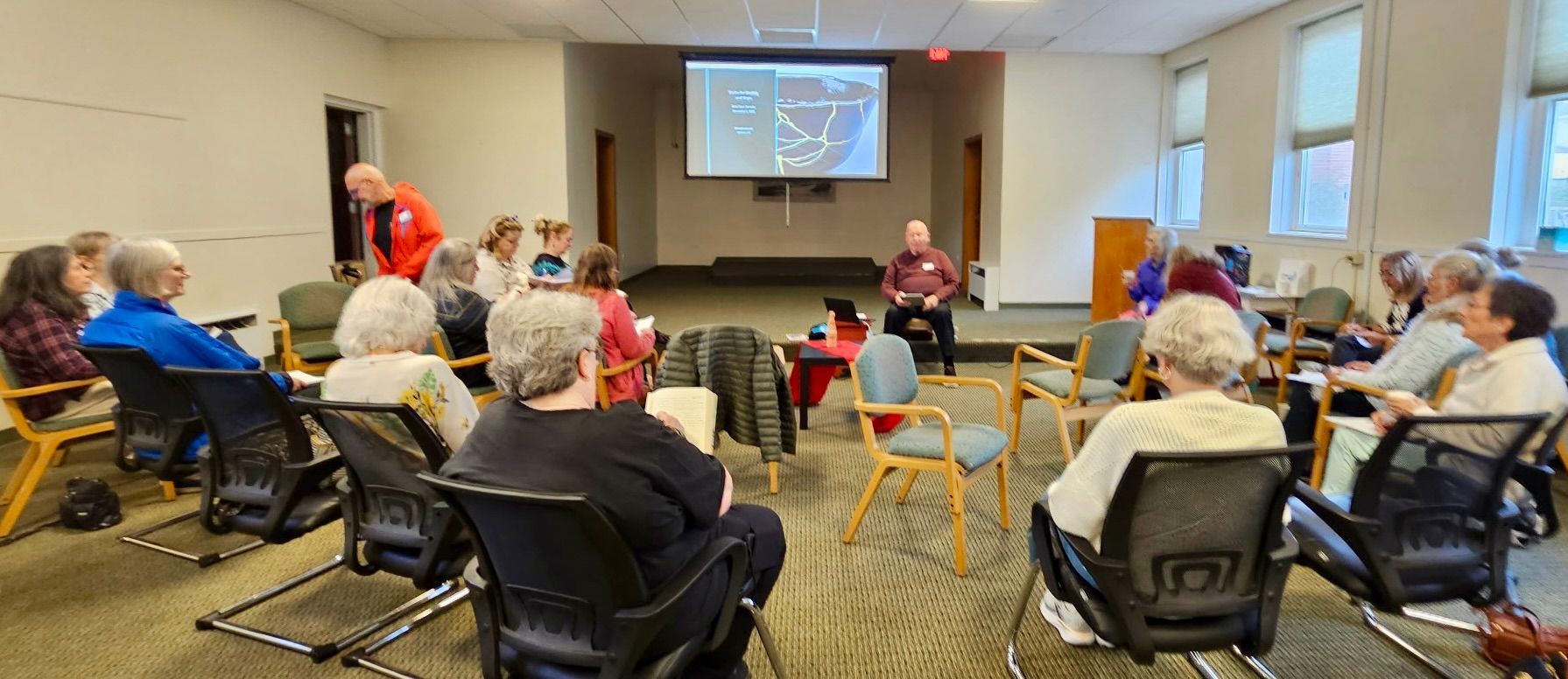
On Thursday, more than twenty of us gathered at Mercy by the Sea Retreat and Conference Center in Madison, Connecticut, for a groundbreaking poetry therapy conference titled "Haiku for Healing and Hope." I told the group at the start: we’re not here to learn to write better poems, but to learn to write poems in order to feel better.
Syllable counting was one of the first misconceptions we smashed. Classic Japanese haiku were not written in three lines of 5-7-5 syllables, but as a single sequence of seventeen sounds that have no equivalent in English. We strive for meaning in writing haiku, not syllable counts. And haiku don’t necessarily need to link to nature. For healing, however, including nature in our poem – rainfall, a flower, mountains and rivers – can keep us from dwelling too much on ourselves and our woes, and anchor us in reality.
People have sensed the link between verse and healing for millennia. The Greeks, after all, recognized Apollo as the god of both poetry and medicine.
Cognitive experts tell us a heavy emotional wound – grief, life-threatening illness, estrangement – tries to shut down our language. Naming it directly might even re-traumatize us. Writing a haiku offers a way around, by talking about our emotional trauma without naming it:
· Call estrangement a crack in a frozen pond
· The emotional withdrawal of a spouse can be salt in a cup of cold tea
· Betrayal – an unfamiliar scent on a shirt
Writing like this externalizes the internal. We shift from being victims of circumstance to objective observers.
Why does it work? James Pennebaker's research in the 1980s showed that putting painful feelings into words changes how we process the emotional trauma. Haiku concentrates that process. A haiku juxtaposes two seemingly disparate or contradictory sensory perceptions side by side and asks us to make the mental leap that connects them – and illuminates us.
Some of the people said they’d never written before or didn’t think they could write a poem, but everyone in the room found they could indeed compose three lines that:
- Spoke about a wound without having to name it
- Turned an inner pain into a sensory detail – the ticking of a clock, perhaps
- Restored a sense of control and mastery with a few carefully chosen words
- Revealed the alternative perspective that always exists alongside pain
As I told the group, healing does not require changing the facts of our life. It requires changing our relationship to those facts. And that leads to hope. Not the naive optimism that everything will turn out well, but the certainty that something makes sense – regardless of how it turns out. This means hope is a choice.
Seeing participants – who never wrote poetry before – lean over their notebooks, share their insights in small group discussions, and bring a little more light into their world reminded me why I do this work. Especially with comments like: “I wrote my first haiku ever about my dear father. I will continue to write, thanks to you.”
None of it cured anyone's pain like some magical elixir. But each person wrote, and that was the therapy. The poem was never the point.