
Twice Dead
March 20, 2026
Sign up for blog updates!
Join my email list to receive updates and information.
They say we die twice: once when we stop breathing, and again when our name is spoken for the last time. Today, on the anniversary of my wife’s birth, her friends, family, and I will speak her name yet again. Jo Anne.
My daughter, Julie, captured this idea in a birthday reflection she wrote after Jo Anne’s death in December 2015:
A year ago, Mom called to wish me a Happy Birthday, as usual.And she started telling me the story of the day I was born: how she was at Woolworth’s on a beautiful spring-like day (like today), buying buttons for a sweater she had just finished knitting, and felt a little something like she’d need to go to the hospital soon.She waited for Dad to come home from work, and made all the arrangements for someone to watch Wendy while Dad took her to the hospital. And just a little while later, there I was.And I started to tease her, telling the story along with her, because she’d told me the same story every year, on my birthday.Then she told me why she kept telling the story: because when Grandpa had died (many years after Nana), she felt that no one in the world was left to remember the day she was born.
In our high-speed culture, grief is too often treated as a disorder to be rid of. We’re expected to “get over it” and return to normal productivity within days. This is where the wisdom of the yahrzeit can apply – for everyone, regardless of faith.
Observing a deceased beloved’s annual date of death was first practiced in the Middle Ages. It melds three aspects:
1. Ascent.
Jewish mysticism, Kabbalah, holds that on the anniversary of a death, the soul reaches a higher level of spiritual elevation. Actions of the living – praying, doing something charitable in the deceased’s name, lighting a candle – fuel this ascent.
2. Prayer.
In reciting the Kaddish prayer – which praises life and the Divine in the face of loss – the mourner testifies that their loved one’s death has not led to despair, but to continued faith.
3. Light.
Burning a twenty-four-hour Yahrzeit candle comes from the Book of Proverbs: "The soul of man is the candle of God."
In my nuclear family, we put more significance on the day of birth over the date of death. But our observances are amazingly similar to the Jewish yahrzeit.
1. Ascent.
We pray for the deceased, offer a charitable donation in their name, that they find rest with the Divine.
2. Prayer.
Just as the Kaddish is a public sanctification, we sanctify the memory of the deceased through the celebration of the Eucharist. On November 2 each year, Catholic churches offer Mass in remembrance of all our departed.
3. Light.
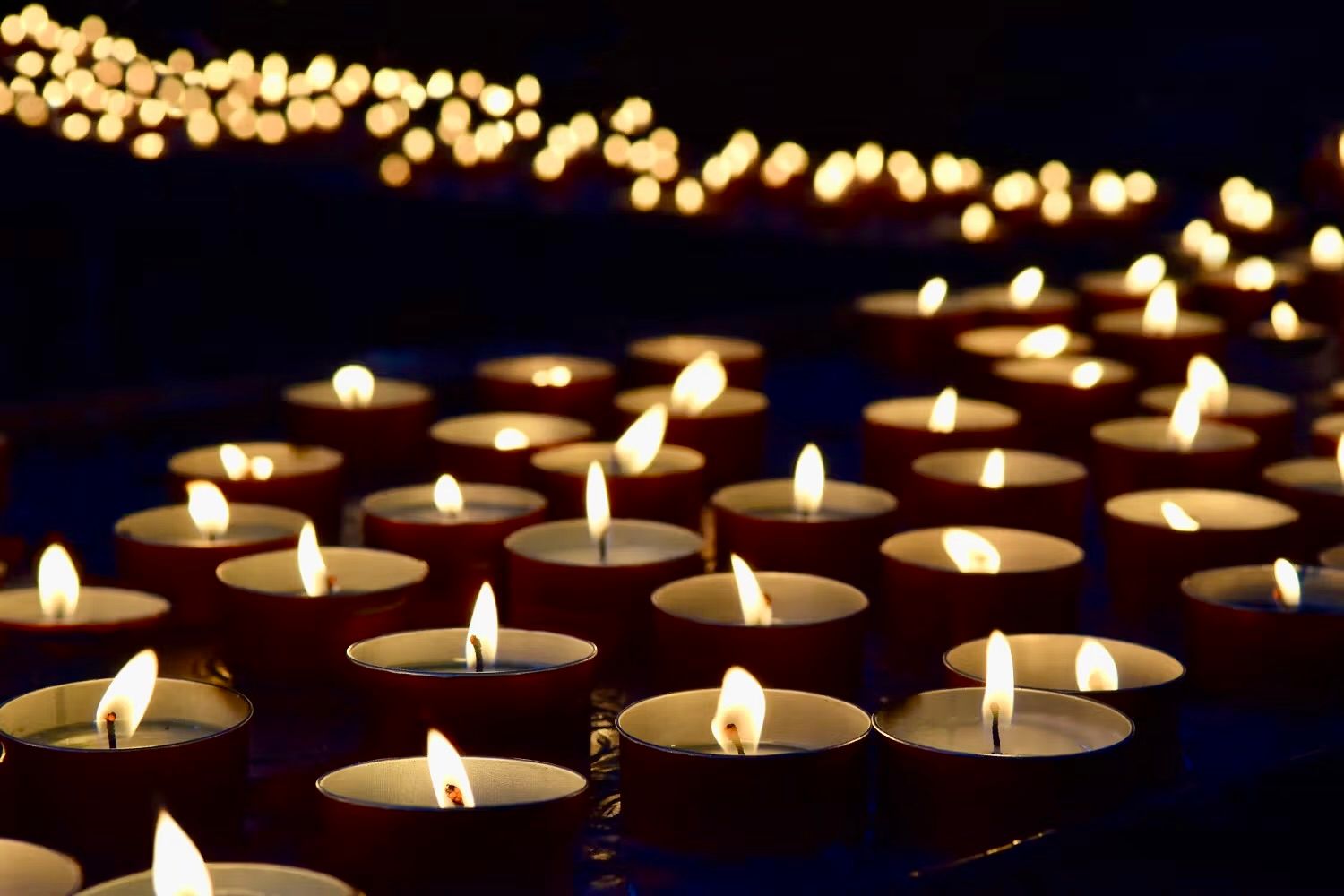
We light a votive candle before a statue or icon. Like the yahrzeit candle, it doesn't just represent the soul that left – it also lights the path for those of us who remain behind. It is our way of saying: “You are still making our world brighter.”
Among us Ukrainians, we seldom use the word dying. Rather, we say someone has fallen asleep in the Lord. This phrase was used by Christ and his early followers as a direct reflection of belief in resurrection.
This concept must have rung true to Jo Anne because among her last words were: “I’ll see you in a few minutes.”