
Misery
March 13, 2026
Sign up for blog updates!
Join my email list to receive updates and information.
Man's inhumanity to woman
You might find this hard to believe, but I just got around to watching the 1990 classic movie, “Misery.” I have news for you. It’s not all that far from reality.
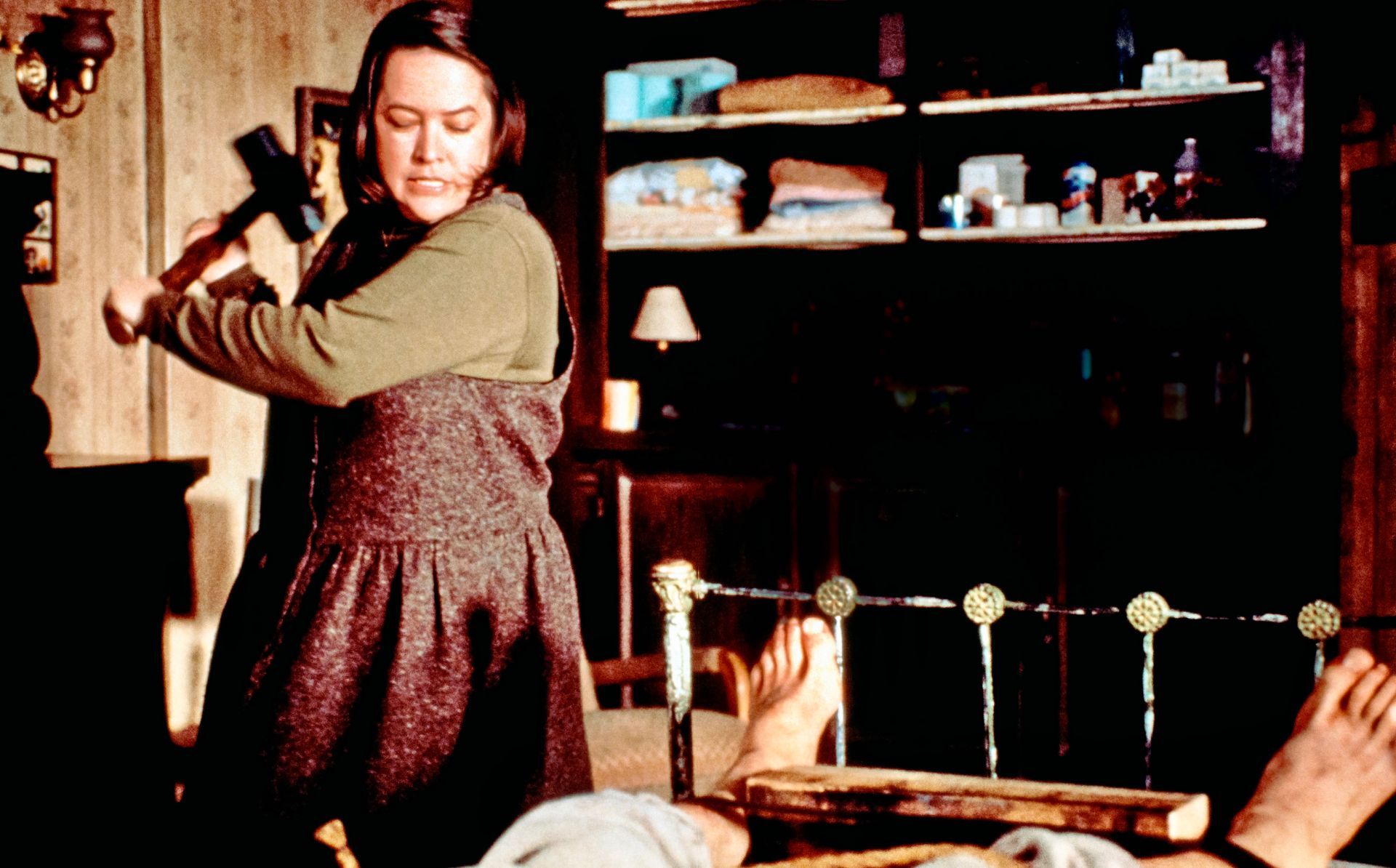
The plot: Best-selling novelist Paul Sheldon is on his way home from his Colorado hideaway after completing his latest book when he crashes his car during a sudden blizzard. He’s critically injured, but is rescued by former nurse Annie Wilkes, Paul's "number one fan," who takes him to her remote house in the mountains to care for him until the blizzard clears (without bothering to tell anybody). Unfortunately for Paul, Annie is also insane. When she discovers that Paul has killed off the heroine in her favorite novels, her reaction leaves Paul shattered (literally).
Among the macho screen idols who declined the role of Paul Sheldon before it was offered to James Caan: Jack Nicholson, Warren Beatty, Robert De Niro, Michael Douglas, Richard Dreyfuss, Harrison Ford, Morgan Freeman, Mel Gibson, Gene Hackman, Dustin Hoffman, William Hurt (twice), Kevin Kline, Al Pacino, Robert Redford, Denzel Washington, and Bruce Willis.
The buzz is that these A-list actors refused the role because it cast them in a passive, subservient role, spending most of the movie abed, being tortured by Nurse Wilkes.
A pivotal scene in the movie comes when Kathy Bates, who won the best actress Oscar for her portrayal, forces Paul Sheldon – under threat of death – to burn the only manuscript of his just-completed new novel because the dialogue is too coarse for her Christian sensibilities.
As you can imagine, the writer is anguished to see his irreplaceable pages go up in a ferocious blaze.
But it’s only a movie, you say. Awful things like this could never happen in real life. Ah, but they do. I’ll tell you about two.
The first involves the late Lucille Clifton, who was poet laureate of Maryland.
Clifton’s mother was a woman gifted with a poetic bent. She wrote poems despite a home life dominated by the demands of a harsh husband, who saw her writing as a threat to her wifely duties. He eventually forced her to burn her manuscripts, silencing her creative voice and turning her art into ash.
Lucille Clifton often spoke of this moment as a trauma that shaped her own work as a poet. She wrote, she said, in honor of her mother’s forced poetic silence. Clifton’s entire body of work can be seen as a response. "I write to keep my mother from being forgotten,” she said.
Here is Lucille Clifton’s "fury," from her 1987 collection, Next.
furyfor mamaremember this.she is standing bythe furnace.the coalsglisten like rubies.her hand is crying.her hand is clutchinga sheaf of papers.poems.she gives them up.they burnjewels into jewels.her eyes are animals.each hank of her hairis a serpent's obedientwife.she will never recover.remember. there is nothingyou will not bearfor this woman's sake.
The second demonstration of man’s inhumanity to woman was told to me by one of the patients in my poetry class at New York City’s Hope Lodge, operated by the American Cancer Society.
She was a middle-aged Puerto Rican woman who had been writing poems for years in a notebook she prized. During an argument, she said, her husband wrested the notebook from her and burned it.
It’s always a man threatened by a woman’s creativity or independence who strikes at the most vulnerable and irretrievable fruit of a woman of soul.
This situation is reversed in “Misery,” with the woman ordering the destruction of the man’s creative product.
But there’s a happy Hollywood ending to the movie. It’s the woman who lies on the floor open-eyed dead. The man goes on. What did you expect?