
The Sinister Side of Christmas
December 26, 2025
Sign up for blog updates!
Join my email list to receive updates and information.
An encore posting from December 2015
We work so hard each December at making Christmas merry, but the roots of our celebrations run deep and dark.
Within the past several days, I’ve attended performances of Charles Dickens’ A Christmas Carol
on Cape Cod and George Balanchine’s The Nutcracker
at Lincoln Center. Two vastly different interpretations of the holiday, but they share a dark heritage.
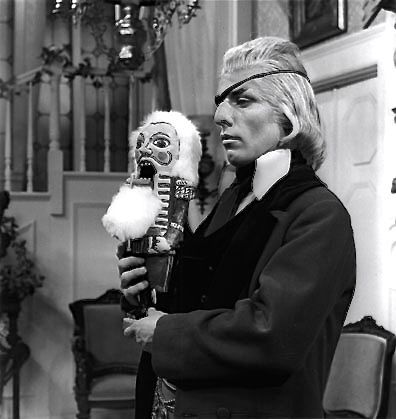
In E.T.A. Hoffmann's 1816 story, "The Nutcracker and the Mouse King," on which the 1892 Tchaikovsky ballet is based, scary old Drosselmeyer (portrayed above by Balanchine) was once the royal rat-catcher, who set traps for the Mouse Queen. This led to a series of incidents that ended in his nephew being turned by an evil spell into a nutcracker.
Hoffmann might have been rebelling against the Enlightenment and its emphasis on rational philosophy. As a Romantic, he believed that imagination was under attack by rationalism. His tale challenged readers to liberate their inner child from the monotony of the real world.
Hoffmann's Romantic approach to imagination, reality and childhood has been lost in most productions of The Nutcracker. The ballet—saved only by Tchaikovsky’s brilliant score—is a holiday diversion full of dancing and merriment. But there's nothing profound in its storyline.
Then there’s Charles Dickens’ A Christmas Carol. Today is the anniversary of its publication—December 19, 1843.
Most of us probably have never read the book, but we’ve all seen plenty of film or theatrical adaptations.
Have you noticed that Dickens leaves out Baby Jesus to concentrate on grotesquery, poverty, indignity, pranks, dancing, food—and death?
There are thousands of novels that tell us we should be kinder and more moral, novelist Michael Faber says, but most of them gather dust. The secret of A Christmas Carol
lies in the real reason for Scrooge's change of heart—his realization that, at long last, he's capable of having fun.
The greatest tragedy Dickens can imagine is an existence devoid of playfulness, of biding time on the way to the grave. Fun, for him, is the only redress for death. Scrooge's triumph is that he looks his own corpse in the face and defiantly resolves to enjoy the gift of life to the full.
It’s not hard to figure out why Christmas fables like A Christmas Carol
and The Nutcracker
draw on the somber to set things in motion. After all, the Biblical narrative of the Nativity has its own sinister backstory, with evil Herod conniving to learn the location of the would-be king of the Jews so he can assassinate the infant in his crib. Failing that, he orders the massacre of every Hebrew boy under the age of two:
In Rama was there a voice heard, lamentation, and weeping, and great mourning, Rachel weeping for her children, and would not be comforted, because they are not.
But true to the manner of Hoffman and Dickens, at this time of good cheer we might do well to declare death null and void in favor of living a full and loving life, one in which we are, at long last, capable of having fun.