
Death, Loss and Life
Sign up for blog updates!
Join my email list to receive updates and information.
A couple of notions about death: 1) It’s natural and nothing much to be concerned about. 2) It’s a curse.
Emily Dickinson, for example, pictured the Grim Reaper as a sort of Uber driver:
Because I could not stop for Death—
He kindly stopped for me—
The Carriage held but just Ourselves—
And Immortality.
And Henry Scott Holland dismissed it entirely:
Death is nothing at all.
I have only slipped away to the next room.
I am I and you are you.
Whatever we were to each other,
That, we still are.
Dylan Thomas, on the other hand, couldn’t contain himself at the prospect of his father’s imminent passing:
Do not go gentle into that good night,
Old age should burn and rave at close of day;
Rage, rage against the dying of the light.
But one thing’s sure. We miss a loved one terribly after they die.
That’s why there is no return to “normal” after a loved one departs. We are changed forever.
The lessons we learn in grieving and mourning a death apply to all loss:
· The loss of financial security or daily companionship following a death
· Divorce or estrangement in relationships
· Job loss
· A bad health diagnosis
· Moving away from a beloved home
· The “empty nest” syndrome that affects parents
· Expectations for loved ones, say, a drug-addicted child
At a grief conference I attended last week, I learned a lot that I didn’t know about death and the subsequent bereavement, and I’d like to pass on to you a few of them.
Conference leader Alan D. Wolfelt, a clinical psychologist, noted how society considers grief as an illness to be treated and cured. The faster the better.
No, he argued. Grief is a normal and necessary process with needs that must be met as they arise and re-arise over time if a loss is to be integrated into our life:
· Acknowledge the reality of the loss
· Embrace the pain
· Remember by name the person who died
· Develop a new self-identity as a solo
· Search for new meaning in your life
· Accept the help of others
He also pointed to the difference between grief and mourning: Grief is internal and must be expressed as mourning – grief gone public, as he put it.
What is the path to healthy mourning? Dr.Wolfelt says mourners have a Bill of Rights that includes things like:
· Experiencing your own unique grief, with its multitude of emotions, without being pressured to “get over it”
· Talking about your grief, referring to the deceased by name, and making use of rituals
· Acknowledging your physical and emotional limits
· Treasuring good memories and accepting unwanted sad ones
· Embracing your spirituality
· Searching for meaning in your life as you move forward and become reconciled to the loss
I have been invited to bring my healing poetry program to hospice, starting next month. It’s a welcome opportunity, but an intimidating one. There is so much to say about death, and yet – nothing. The wisest men and women through history have said all there may be to say.
But I do know how to point to the most sensitive among us – poets, hoping these, who are most attuned to living, may help others find end-of-life peace.
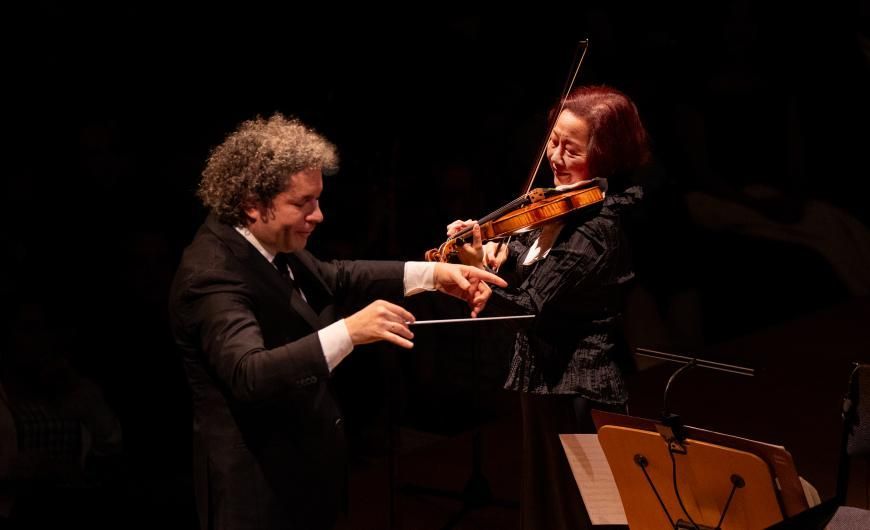
I think of the musician known as a symphony orchestra’s principal first violin, who carries the title of concertmaster. They rise just before the conductor takes the podium and conjure up a note, to which all the other members of the symphony tune their instruments.
Perhaps their more important role: if the conductor's gesture is unclear, the other members of the orchestra look to how the concertmaster is playing in order for them to stay perfectly together.
In times of death or bereavement, who is the concertmaster we look to, with whom our lives can resonate? Poets, perhaps?
Because it’s vital that we move from grieving to mourning – the outward expression of grief – in order to reconcile and integrate our loss and live a life of new meaning.
This is where healing poetry comes in. Writing a poem is a safe place to socialize our grief – to make it public.
How? A poem is a witness — a refusal to let a loss be unseen, unspoken, or forgotten. Like this one by Marie Howe, an elegy for her brother John, who died of AIDS-related illness:
What the Living Do
Johnny, the kitchen sink has been clogged for days, some utensil probably fell down there.
And the Drano won’t work but smells dangerous, and the crusty dishes have piled up
waiting for the plumber I still haven’t called. This is the everyday we spoke of.
It’s winter again: the sky’s a deep, headstrong blue, and the sunlight pours through
the open living-room windows because the heat’s on too high in here and I can’t turn it off.
For weeks now, driving, or dropping a bag of groceries in the street, the bag breaking,
I’ve been thinking: This is what the living do. And yesterday, hurrying along those
wobbly bricks in the Cambridge sidewalk, spilling my coffee down my wrist and sleeve,
I thought it again, and again later, when buying a hairbrush: This is it.
Parking. Slamming the car door shut in the cold. What you called that yearning.
What you finally gave up. We want the spring to come and the winter to pass. We want
whoever to call or not call, a letter, a kiss—we want more and more and then more of it.
But there are moments, walking, when I catch a glimpse of myself in the window glass,
say, the window of the corner video store, and I'm gripped by a cherishing so deep
for my own blowing hair, chapped face, and unbuttoned coat that I’m speechless:
I am living. I remember you.
(Image: Conductor Gustavo Dudamel and associate concertmaster Bing Wang of the Los Angeles Philharmonic.)