
Life Between Scans
Sign up for blog updates!
Join my email list to receive updates and information.
An alternative perspective always exists alongside our pain.
It always astounds me that the women enduring one of the worst hands life deals out are the ones most uplifting and inspiring.
This happened to me again last week, when I attended a day-long conference at Yale Cancer Center for women diagnosed with metastatic breast cancer.
The meeting was intended to update the more than one hundred attendees about breast cancer research and treatment progress in HER2+ Cancer, Hormone Receptor Positive Cancer, and Triple Negative Cancer.
There was also a session on the unprecedented aid being seen with the disciplined application of artificial intelligence.
The news was overwhelmingly reassuring. Advances in understanding and arresting various forms of cancer are taking place on an almost daily basis. The 800-pound gorilla in the room, of course, is the Trump administration’s draconian cuts to cancer research.
The funding reductions address core research – the inquiries into areas that might possibly yield a breakthrough, or promise of a breakthrough, that are then adopted by the pharmaceutical companies to develop into revenue-generating applications. The result of the current government’s reductions affect the long-range battle against cancer.
Note that drug companies invest in cancer medications only after the basic research has yielded some genuine promise that might yield to – you guessed it – profit.
This news bolstered my conviction that it’s more important than ever for us, as individuals, to go to work. For example, the Breast Cancer Awareness Walk next week – on October 18.
I gave a brief report at the caregivers’ breakout session on applying poetry therapy to ease the stresses of cancer diagnosis and treatment. I urged the caregivers to involve themselves in aiding not just their loved ones – but the entire breast cancer community.
For example, my classes in writing healing poetry for the American Cancer Society‘s Hope Lodge in New York City, the day- and weekend poetry writing retreats I lead at Connecticut conference centers, the bi-weekly Zoom workshops I conduct as a continuing support effort.
On November 5 I’m launching a new program at Mercy by the Sea Retreat and Conference Center in Madison, Connecticut. I’ll be showing participants how to write haiku, the three-line poetry developed in Japan more than a thousand years ago.
Studying and composing haiku as a healing resource has one great insight that I will share with the participants on November 5: an alternative perspective always exists alongside our pain.
This classic poem by eighteenth century poet Kobayashi Issa demonstrates:
trusted with the fields—
a scarecrow
smiling in the sun
The poem turns an ordinary farm object into a bright focal point pointing to peace. Instead of seeing a grim figure, looking for the alternative reality reframes a scarecrow as a joyful guardian basking in a secure and thriving landscape. It’s this function of the haiku that offers hope.
Hope has had many definitions through the ages. Václav Havel, the playwright and poet who became first president of the Czech Republic, said it so well: “Hope is not the conviction that something will turn out well, but the certainty that something makes sense – regardless of how it turns out."
Making sense. Not finding meaning – but making it.
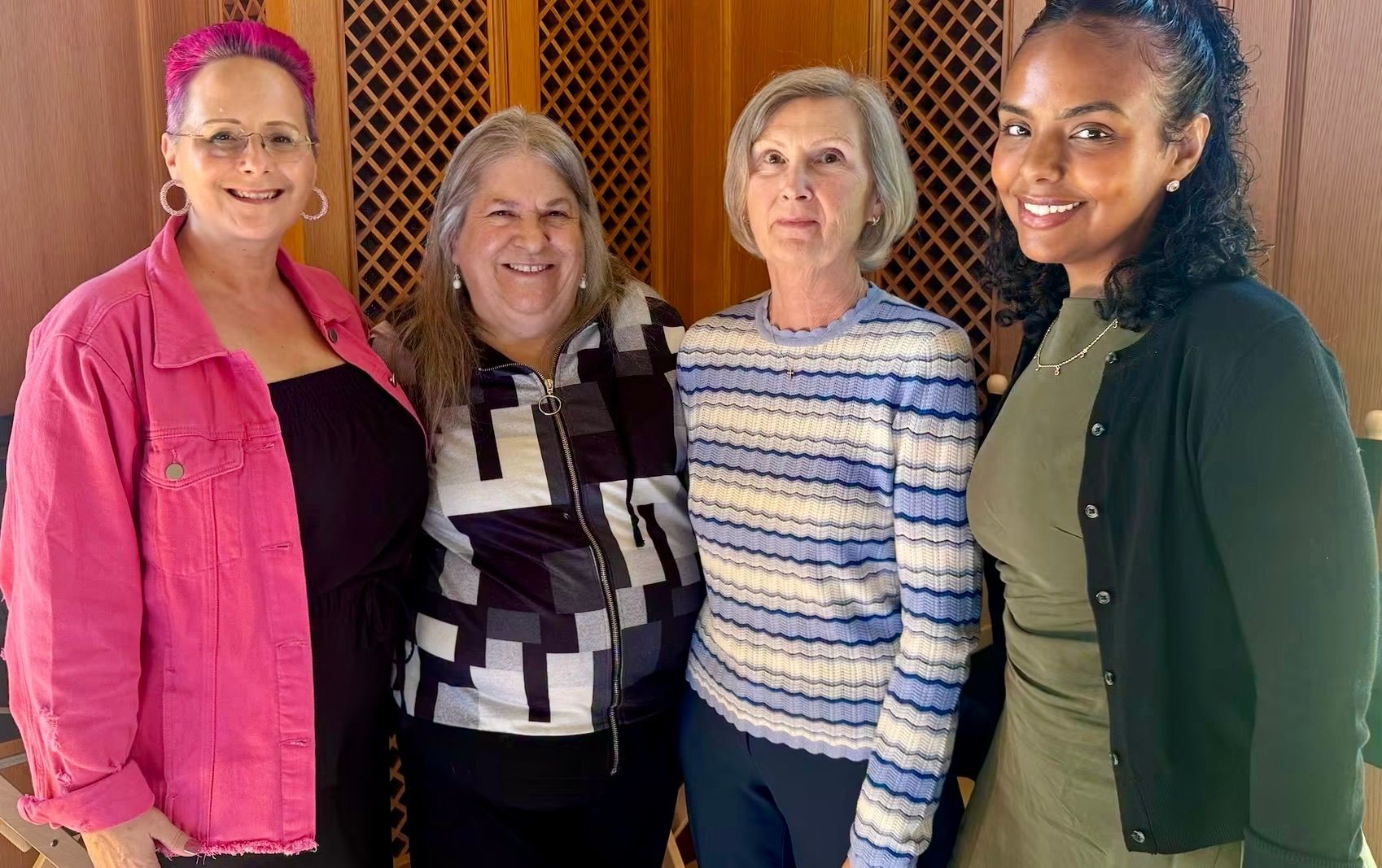
(Image: This panel of beautiful women living with metastatic breast cancer was moderated by Marji Shapiro, second from left, one of my healing poetry students, who inspired the title of this blog.)