
But for the Grace
January 30, 2026
Sign up for blog updates!
Join my email list to receive updates and information.
All of us human beings are siblings
I had lunch last week with a man with no arms. Perched on his seat, he used his feet as hands. The only assist he needed was freeing the butter pat from its wrapper.
This was one memorable moment in a week that flooded me with news of wearying misfortune:
• A boyhood friend who underwent aorta repair• His wife developing balance issues that see her now reliant on a walker• A cancer patient in one of my poetry classes whose radiation treatments are scheduled as late as fifteen past midnight because the proton machine is in such demand
The sixteenth-century phrase, "There but for the grace of God go I," forces us to acknowledge that our circumstances often owe more to chance than to our own merit. The saying is attributed to the British preacher John Bradford’s witnessing prisoners being led to execution.
Whether we like it or not, we have to accept that only a thin line separates fortune and misfortune.
Sure, personal responsibility plays a dominant role in shaping our lives, but Bradford’s observation reminds us of the numerous factors beyond our control that shape our lives: the families we're born into, the opportunities that come our way or don't, the health we enjoy or the illnesses we suffer, the moment in history in which we live, and the randomness of being in the right or wrong place at the right or wrong time.
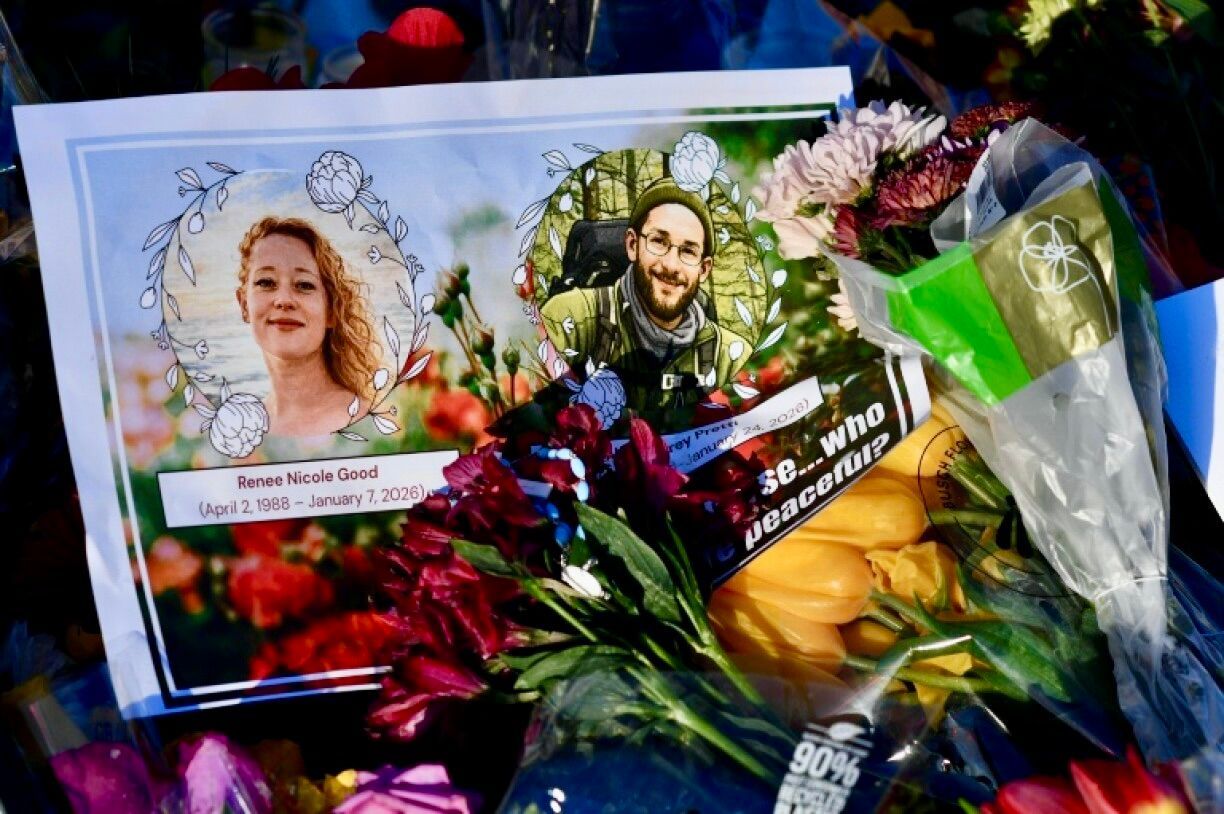
Like the two obviously innocent Minneapolis citizens whose murders by their own government have galvanized our attention in recent days.
Lay their deaths against these lines from a poem by Thomas Merton:
The straight tree is the first to be cut down,The spring of clear water is the first to be drained dry.
The poet John Donne captured the connectedness of the human family when he wrote:
"No man is an island, entire of itself; every man is a piece of the continent, a part of the main."
His words remind us that another person's suffering diminishes all of us, and we cannot flee this fundamental truth: we are woven together in the fabric of existence.
But also – the threads that support one person might just as easily uplift another.
In a world that divides people into deserving and undeserving, successful and unsuccessful, Bradford and Donne remind us that the boundaries between us are far more porous than we’re wont to admit, and that each of us is fertile soil for either good fortune or crippling struggle.
The “grace” lies not just in being spared one fate or blessed with another, but in recognizing this truth and opening ourselves to it.
Perhaps part of living by the principle of "but for the grace of God" is simply being present to others with compassion, because all of us human beings are siblings.
Author Anne Lamott says it well: "Lighthouses don't go running all over an island looking for boats to save; they just stand there shining."