
Bringing Poetry to Hospice
Sign up for blog updates!
Join my email list to receive updates and information.
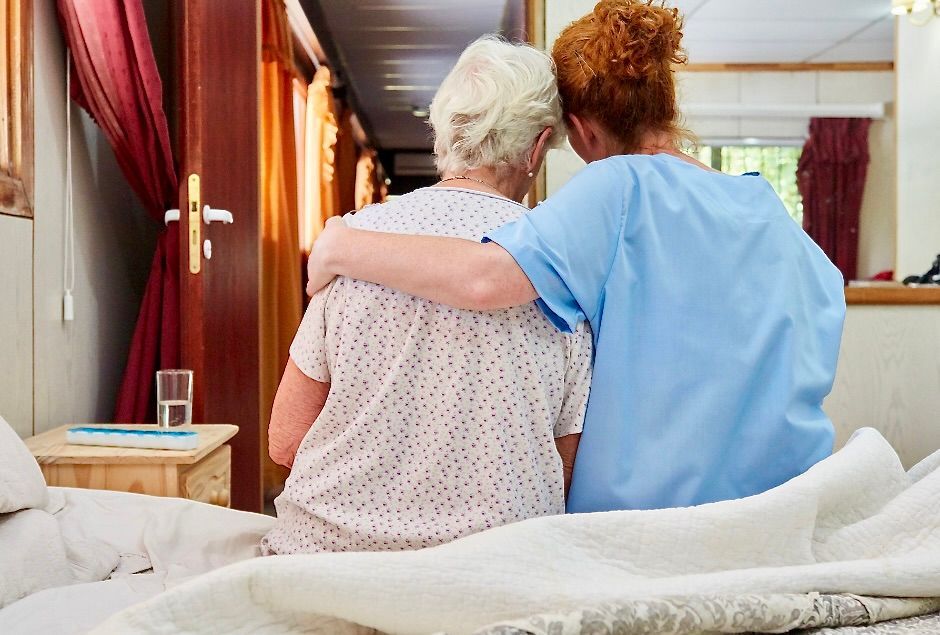
A poem enables you to see your fear as something outside yourself
I’m beginning to understand why I am still here when so many of my contemporaries have passed on, and why I’m in relatively vigorous physical condition when so many people younger than me are frail and fragile.
It’s because I still have work to do. Through no action on my part, I’ve been invited to become a hospice volunteer. Specifically, I’ve been asked to bring comforting poetry to hospice patients and their families.
As you know, for the past four years or so I’ve made it my “old man’s project” to guide cancer patients and caregivers in writing poems to ease the stresses of the disease. This work has expanded to the point that I facilitate day and weekend retreats to bring poetry to bear on emotional trauma of all kinds. And for the past year I’ve hosted bi-weekly Zoom programs in healing poetry.
Why bring poetry into hospice?
We humans have a 5,000-year history of making poetry to celebrate ourselves and to console ourselves. Every human civilization has enshrined its highest aspirations in verse:
· The Psalms and so much else in the Hebrew Scriptures are poetry
· The Hindu Bhagavad Gita (Song of God) is a poem
· The Islamic Qur'an is considered untranslatable because its divine meaning is in its language and sound
Poetry has been called “prayer for the secular” because both poetry and prayer recognize something beyond, and both gaze with the eye of the soul to imagine what can’t be imagined.
Aren’t these the very subjects that occupy our minds in our final times?
Poets don’t look "up" to find the transcendent as much as they look down and around and in. Because poets know nothing is ordinary, that the sacred Is in the ordinary.
When they do this, what they typically discover are words and thoughts of comfort.
Rainer Maria Rilke, who died of leukemia at a relatively young age, found this wisdom, which resounds down the decades since he wrote it a century ago:
Let this darkness be a bell tower
and you the bell. As you ring,
what batters you becomes your strength.
This is an example of how a poem enables you to see your fear as something outside yourself – from a distance safe enough to look at it without being swallowed by it.
What do I hope to bring to hospice patients?
Perhaps revisiting with them the long road they've traveled and the people who helped them along the way. Perhaps helping them realize they are larger than their fears and more resilient than what’s hurting them. Perhaps reminding them that there is always something that still is theirs – something illness or pain or fear cannot touch.
Almost always it will be something small: a fond voice or a face they loved. The best gifts are presented in small boxes, aren’t they?
Hospice was born in the mid-twentieth century, from the work of Cicely Saunders. A British nurse, social worker, and later a physician, Saunders was deeply troubled by the inadequacies of the post-WWII medical system, which prioritized "curing" and often ignored the suffering of patients for whom a cure was impossible. In 1948 she began building a facility to blend research, clinical excellence, and compassion. There she introduced the concept of "Total Pain" to acknowledge that suffering is not only physical, but also psychological, emotional, social, and spiritual. Modern hospice is interdisciplinary, with teams of physicians, nurses, social workers, chaplains, and volunteers. According to the World Health Organization, hospice serves some 10.4 million patients worldwide each year, only about fourteen percent of an estimated 56.8 to 73.5 million people globally who need end-of-life care. The core principal of hospice is consistent: that a good death depends on being accompanied. In other words, how we companion the dying is a reflection of our humanity.