
Absent from the Wedding Feast
February 20, 2026
Sign up for blog updates!
Join my email list to receive updates and information.
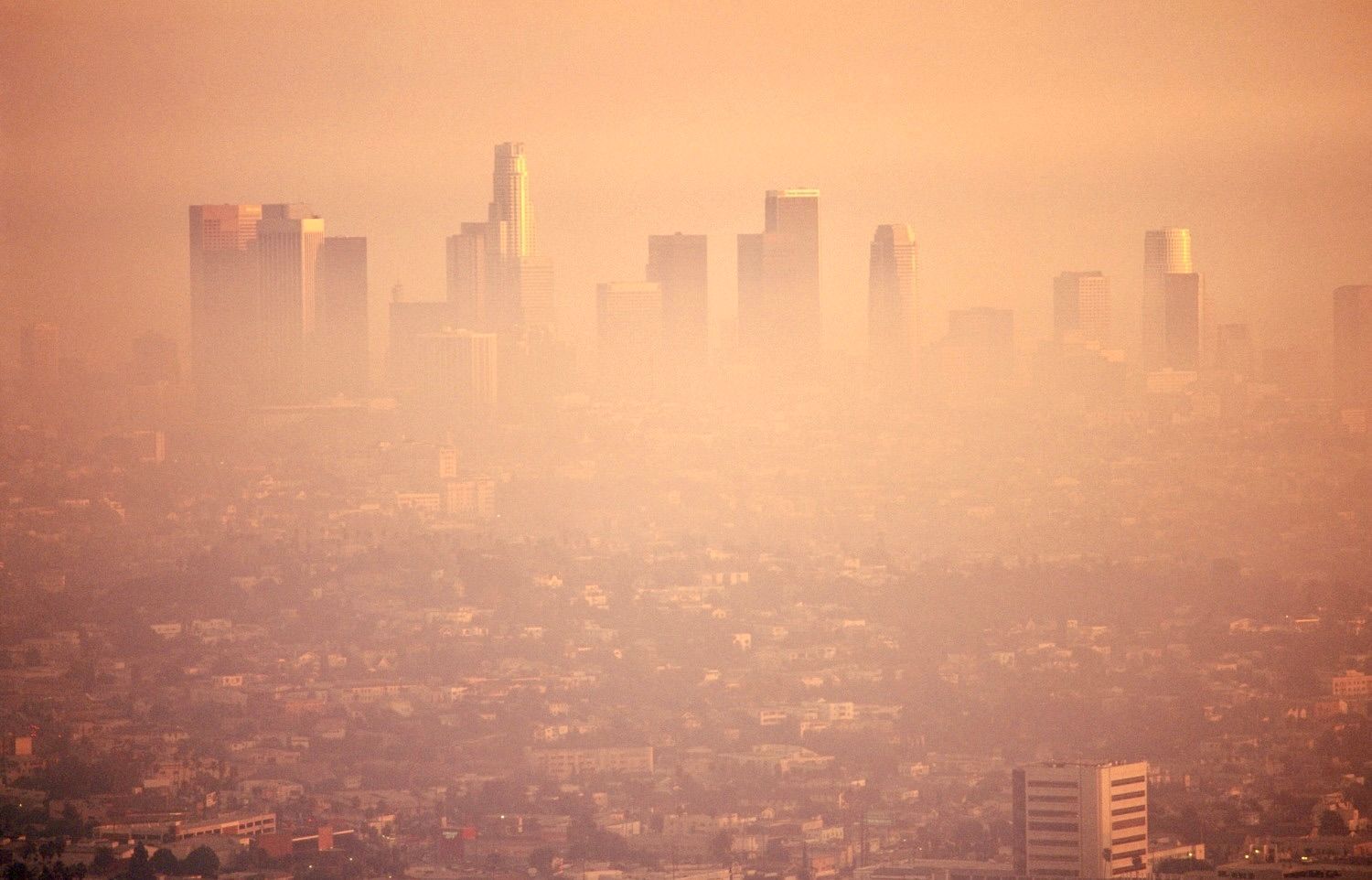
Things will only get worse
Her words struck me like the crack of a whip against my naked back.
"I'm going to see more sick kids come into the emergency department having asthma attacks and more babies born prematurely.”
That assessment came from Dr. Lisa Patel, a pediatrician and head of the Medical Society Consortium on Climate and Health, adding that her colleagues will see more heart attacks and cancer.
She was talking about the repeal last week of the Supreme Court’s 2009 endangerment finding, which could erase limits on greenhouse gas pollution from cars, factories, and power plants.
I’m old enough to remember the stench emitted from the tailpipes of the pre-catalytic-converter cars of the Fifties. I’ve been to Cairo and Bangkok, where the pollution hung so heavy I could almost taste it. I’ve suffered through eye-stinging smog episodes in Los Angeles.
The Getty Images photo up top, by the way, is from a Los Angeles Magazine
story updated last August, headlined, “LA Leads the Nation in Smog, As Usual.”
A Lung Association “State of the Air” report released last year found that nearly 120 million people live in areas with unhealthy air quality, and more than half of them are people of color. People of color were sixty-four percent more likely than white people to live in a county with a failing grade in at least one of the study’s pollution categories.
So, in light of last week’s repeal, I guess things will only get worse.
Which is sad, because there’s always been an inexplicable connection between humankind and nature.
We all know people, for example, who claim they find the Divine quicker in the woods than in church.
Most repellent about the attack on our environmental protection regulations is that it comes precisely as we commemorate the eight-hundredth anniversary of the death of Saint Francis of Assisi, who is famous for his unique relationship with the natural world.
Dana Gioia, who served as poet laureate of California from 2015 to 2018, says this about the famous “Canticle” written by Francis:
“This poem is the beginning of modern Italian poetry. It is the first great poem written in the language of everyday people. It is therefore the foundational text of all subsequent Italian poetry. The worldview expressed in this poem is radically innovative. You will not see any poem which expresses these ideas before this point. Francis looks at the universe and the world not as abstract entities that are governed by physical principles but as a single family united by love.”
Gaia translated the poem beautifully from medieval Italian:
The Canticle of All Creatures
Most high, all powerful, and most good Lord,Yours are the praises, glory, honor, blessings.Only to you, Altissimo, do they belong.And none are worthy to pronounce Your name.Praise to You, my Lord, for all creation,Most specially our noble Brother Sun,Bringing the day by which You grant us light.He shines, so fair and radiant in his splendor,We recognize in him, Most High, your likeness.Praise to You, my Lord, for Sister MoonAnd all the stars You set among the heavens,Which are so precious, bright, and beautiful.Praise to You, my Lord, for Brother Wind,And for the air, both stormy and serene.In every clime, You give your creatures sustenance.Praise to You, my Lord, for Sister Water,Who is so helpful, humble, prized, and pure.Praise to You, my Lord, for Brother Fire,Illuminating night for us. He isRobust and cheerful, beautiful and strong.Praise to You, my Lord, for Mother Earth,Who feeds and governs us. From her we gainAll luscious fruits, all colored herbs and flowers.Praise to You, my Lord, for those who pardonwho prompted by your love bear sickness and disasterBlessed are they who suffer these in peace,They shall be crowned by You, Altissimo.Praise to You, my Lord, for Sister Death,From whom no mortal body can escape.Doomed are those she finds in mortal sin.Blessed are those found faithful to Your will.The second death will pass them by unharmed.Praise and bless the Lord and give Him thanks.And serve Him in supreme humility.
Mystic Thomas Merton lived in a one-room, cinderblock dwelling deep in the woods behind the Trappist monastery of Gethsemane in the hills of Kentucky. He wrote this: “Living away from the earth and the trees, we fail them. We are absent from the wedding feast.”